Adventures of Hercules: Tale of Demigod and His Twelve Labor

vcdiversity.org – Hercules, also known as Heracles in Greek mythology, is one of the most celebrated heroes in ancient stories. Born with immense strength, he was the son of Zeus, the king of the gods, and a mortal woman named Alcmene. Hercules’ life was filled with trials and tribulations, but his courage and determination made him a symbol of heroism and perseverance.

The Twelve Labors of Hercules

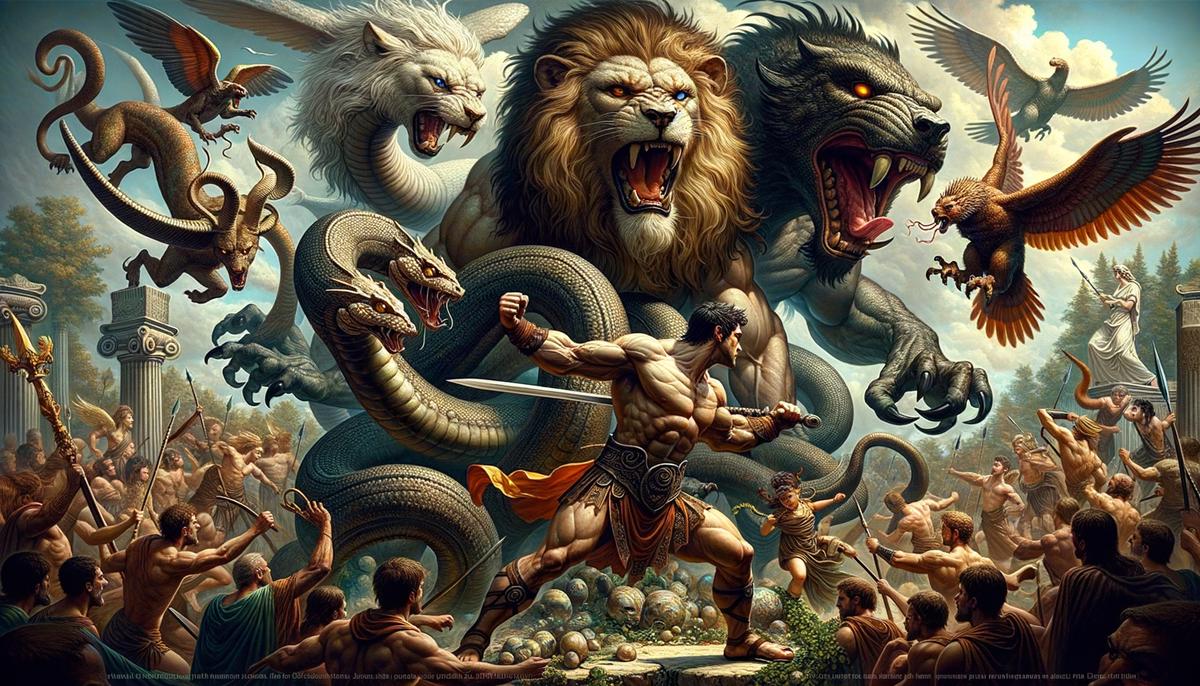
The most famous tales of Hercules revolve around his twelve labors, tasks he was commanded to complete as penance for killing his wife and children, a deed done under the influence of Hera, Zeus’s jealous wife. These labors were designed to be impossible, yet Hercules, with his wit and strength, managed to overcome each challenge.

1. The Nemean Lion

Hercules’ first labor was to slay the Nemean Lion, a beast with impenetrable skin. Unable to harm the lion with his arrows, Hercules resorted to wrestling it with his bare hands, eventually strangling it to death. He then used one of the lion’s own claws to skin it, creating a cloak that would protect him in future battles.

2. The Lernaean Hydra

The second labor involved defeating the Lernaean Hydra, a serpentine monster with multiple heads. Each time one head was cut off, two more would grow back. Hercules enlisted the help of his nephew Iolaus, who would cauterize the neck stumps to prevent new heads from growing. After defeating the Hydra, Hercules dipped his arrows in its poisonous blood, making them deadly.

3. The Ceryneian Hind

Hercules was tasked with capturing the Ceryneian Hind, a golden-horned deer, without harming it. After a year-long chase, he managed to capture the hind and bring it back to his king, showcasing his patience and skill in hunting.

4. The Erymanthian Boar

The fourth labor required Hercules to capture the Erymanthian Boar, a giant and ferocious beast. He chased the boar through deep snow and into a thicket, where he trapped and subdued it, demonstrating his bravery and determination.

5. The Augean Stables

Hercules’ fifth task was to clean the stables of King Augeas, home to thousands of cattle, in a single day. By diverting the rivers Alpheus and Peneus, Hercules managed to wash away the filth, completing the labor with ingenuity rather than brute force.

6. The Stymphalian Birds

The Stymphalian Birds, man-eating creatures with bronze beaks and sharp metallic feathers, were the sixth challenge. Hercules used a rattle given by Hephaestus to frighten the birds into the air, then shot them down with his arrows.

7. The Cretan Bull

Hercules had to capture the Cretan Bull, a ferocious beast that was terrorizing Crete. After a fierce battle, he subdued the bull and brought it back to Greece, showcasing his unmatched strength.

8. The Mares of Diomedes

The eighth labor involved capturing the man-eating mares of Diomedes, the king of the Bistones. Hercules defeated Diomedes and fed him to his own horses, taming them and leading them back to Greece.

9. The Belt of Hippolyta

Hercules was tasked with obtaining the belt of Hippolyta, the queen of the Amazons. Initially, Hippolyta agreed to give him the belt, but Hera, disguised as an Amazon, spread a rumor that Hercules was abducting their queen. A battle ensued, and Hercules killed Hippolyta, taking the belt by force.

10. The Cattle of Geryon

The tenth labor required Hercules to bring back the cattle of Geryon, a monster with three bodies. After a long journey, Hercules encountered and killed Geryon, driving the cattle back to Greece.

11. The Apples of the Hesperides

Hercules’ eleventh task was to retrieve the golden apples from the Garden of the Hesperides. With the help of Atlas, who held up the sky, Hercules managed to obtain the apples, using his wits to trick Atlas into completing the task for him.

12. Cerberus

The final labor was to capture Cerberus, the three-headed dog that guarded the entrance to the Underworld. Hercules, with his strength and courage, managed to subdue Cerberus and bring him to the surface, completing his twelve labors.

Legacy of Hercules

Hercules’ twelve labors are a testament to his strength, courage, and determination. These tales have been passed down through generations, inspiring stories, art, and even modern adaptations. Hercules remains a symbol of heroism, a demigod whose adventures continue to captivate the imagination of people around the world.

Tales of the Giant Sea Monster: The Kraken

vcdiversity.org – The Kraken, a legendary sea monster of immense size and power, has long been a subject of fascination and fear in maritime folklore. Originating from Norwegian stories and later popularized by sailors across the globe, the Kraken is often depicted as a colossal cephalopod or a serpentine creature capable of sinking ships and devouring sailors whole. This article delves into the myths, legends, and cultural impact of the Kraken, exploring its place in history and its enduring appeal in modern times.

Origins of the Kraken

The tales of the Kraken can be traced back to the 13th century, with the earliest written accounts appearing in Norse literature. The creature was said to inhabit the icy waters of the North Atlantic, particularly around Norway and Iceland. The name “Kraken” is believed to derive from the Norwegian word “krake,” meaning “claw” or “hook,” possibly referring to the creature’s tentacles.

Descriptions and Depictions

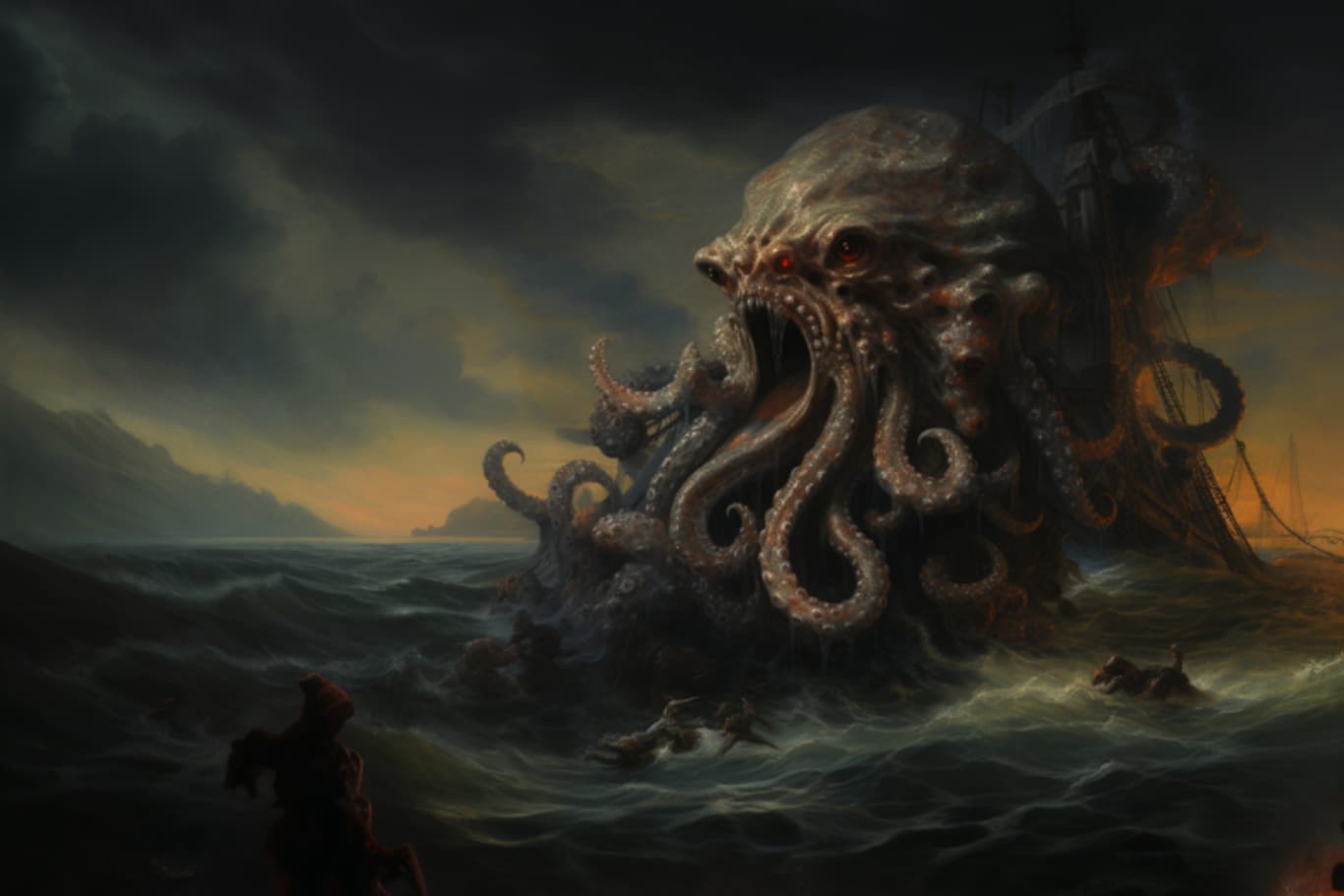
Over the centuries, the Kraken has been described in various ways, often with contradictory features. Some accounts portray it as a giant squid or octopus, with tentacles long enough to wrap around a ship and drag it underwater. Others depict it as a serpentine monster with multiple heads or as a massive whale-like creature. Despite these differences, the Kraken is universally depicted as a formidable predator, capable of instilling terror in even the most seasoned sailors.

The Kraken in Popular Culture

The legend of the Kraken has inspired countless works of art, literature, and film. It has been featured in everything from Herman Melville’s “Moby-Dick” to modern video games and movies. The creature’s ability to adapt to different mediums and genres is a testament to its enduring popularity and the universal appeal of sea monster tales.

The Kraken and Scientific Discovery

The discovery of giant squid specimens in the 19th and 20th centuries added a layer of plausibility to the Kraken myth. These real-life giants of the deep, with their colossal size and elusive nature, seemed to confirm the existence of monstrous creatures in the ocean’s depths. While these discoveries debunked the more fantastical elements of the Kraken legend, they also sparked new interest in the creature, blurring the lines between myth and reality.

Conclusion

The Kraken remains one of the most iconic sea monsters in history, a symbol of the ocean’s mysteries and the unknown dangers that lurk beneath the waves. Whether viewed as a mythical beast or a metaphor for human fears, the Kraken continues to captivate the imagination, reminding us of the enduring power of legend and lore. As we continue to explore the depths of the ocean, the tales of the Kraken serve as a reminder of the wonders—and terrors—that may yet be discovered in the world’s last unexplored frontier.

Tales of Childhood Joy: The Wonder Years

vcdiversity.org – Nostalgia is a curious thing. It has the power to transport us back in time, to a place where the worries of adulthood seem distant and the joys of childhood reign supreme. Among the many cultural touchstones that evoke this sensation, “The Wonder Years” stands out as a beacon of nostalgia, reminding us of the innocence, the discoveries, and the simple pleasures of growing up.

“The Wonder Years” is not just a television show; it’s a time capsule, a collection of tales that resonate with anyone who has ever been a child. Premiering in 1988 and running for six seasons, this American television coming-of-age comedy-drama series was set in the late 1960s and early 1970s and centered on Kevin Arnold, played by Fred Savage. Through Kevin’s eyes, viewers were invited into the Arnold household, where they witnessed the ups and downs of family life, the complexities of friendships, and the awkwardness of adolescence.

One of the most striking aspects of “The Wonder Years” is its ability to capture the essence of childhood joy. Each episode is a vignette, a snapshot of a moment that, while seemingly mundane, is imbued with a sense of wonder. Whether it’s Kevin’s first kiss, his struggles with schoolwork, or his adventures with his best friend, Paul, each story is told with a tenderness and a humor that make it relatable and endearing.

The show’s narrative is framed by the reflections of adult Kevin, voiced by Daniel Stern, whose wisdom and wit add depth to the storytelling. This device not only provides context and insight into the events of Kevin’s life but also serves as a reminder of how our experiences shape us. It’s a gentle nudge to the viewer to reflect on their own journey, to remember the lessons learned and the joys felt during their wonder years.

Music plays a crucial role in evoking the emotions of the era and the experiences of Kevin and his friends. The use of songs from the 1960s and 1970s, particularly Joe Cocker’s “With a Little Help from My Friends,” which serves as the show’s theme song, helps to set the tone and mood of each episode. The music is more than just a backdrop; it’s an integral part of the storytelling, enhancing the emotional impact of the scenes and resonating with the audience on a personal level.

“The Wonder Years” also tackled serious issues with sensitivity and grace. From the Vietnam War to racial tensions, the show didn’t shy away from the complexities of the time. Instead, it used these real-world events as a backdrop to explore the characters’ growth and development. It showed that even in the midst of turmoil, there is room for joy, for laughter, and for the simple pleasures of life.

The show’s enduring appeal lies in its universal themes. It speaks to the shared human experience of growing up, of navigating the world with a mix of curiosity and trepidation, and of finding joy in the small moments. “The Wonder Years” reminds us that childhood is a time of discovery, a period of life filled with wonder and possibility.

As we look back on “The Wonder Years,” we are reminded of the importance of cherishing our memories, of holding onto the innocence and joy of childhood. The show serves as a reminder that no matter how complicated life may become, there is always room for wonder, for laughter, and for the simple joys that make life worth living.

In the end, “The Wonder Years” is more than just a television series; it’s a celebration of childhood, a tribute to the joys and challenges of growing up, and a reminder that, no matter our age, we all carry with us the wonder of our youth.

A Timeless Tale of Magic and Mischief: The Sorcerer’s Apprentice

The Sorcerer’s Apprentice is a classic narrative that has captivated audiences for centuries, transcending through various forms of media and adapting to different cultural contexts. At its core, the story is a cautionary tale about the dangers of dabbling in powers beyond one’s control, yet it is also a celebration of human curiosity and the desire to explore the unknown. This article delves into the origins of The Sorcerer’s Apprentice, its most famous adaptations, and the enduring appeal of this enchanting story.

Origins and Evolution

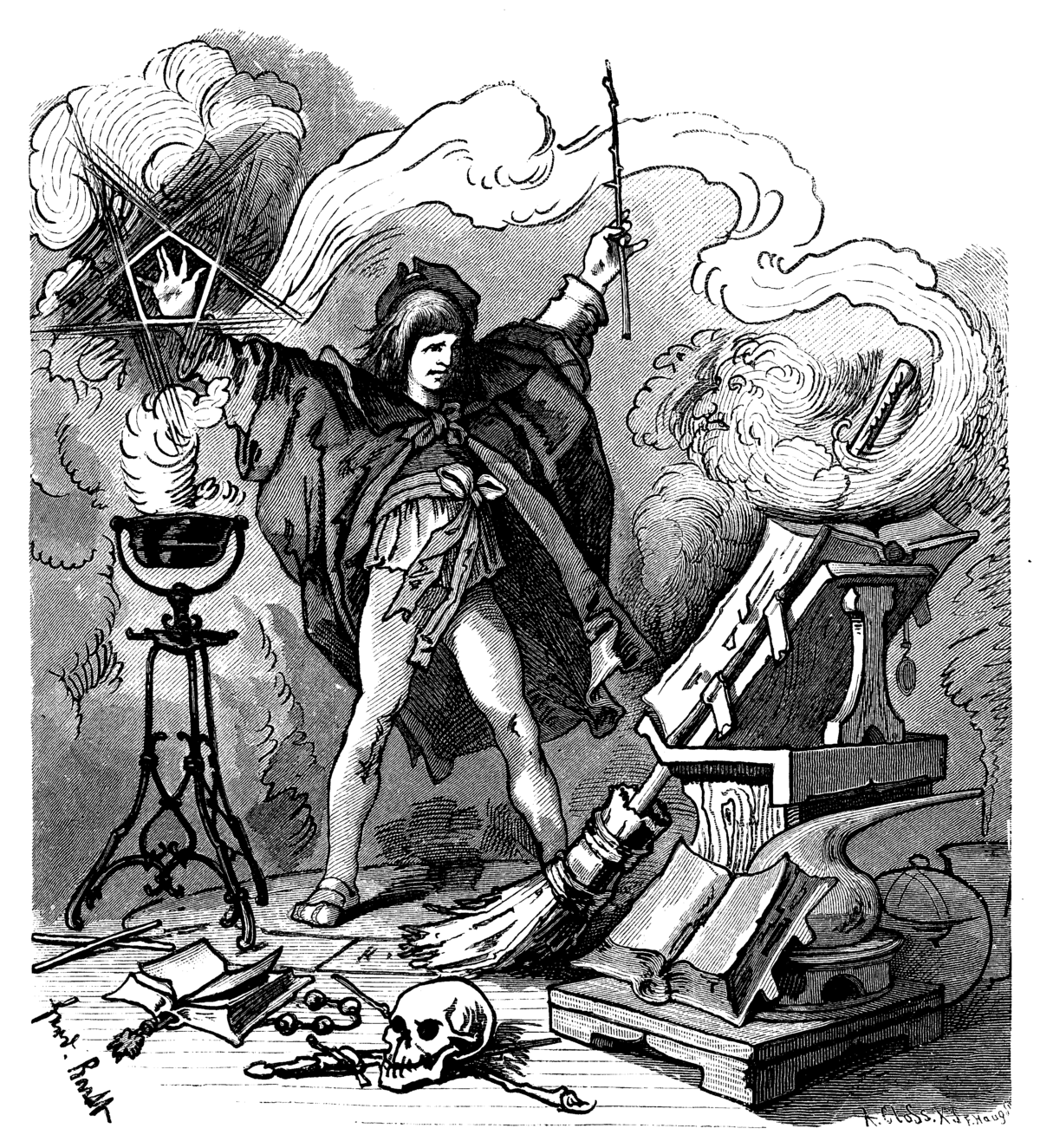
The tale of The Sorcerer’s Apprentice can be traced back to the 18th century, with its roots deeply embedded in European folklore. However, it was Johann Wolfgang von Goethe who immortalized the story in his 1797 poem “Der Zauberlehrling.” In Goethe’s version, a young apprentice, eager to prove his magical prowess, casts a spell to animate a broomstick to fetch water for him. The spell goes awry when the apprentice, unable to control the enchanted broom, finds himself in a flood of water as the broom continues to fill the room. The situation escalates until the sorcerer returns and rectifies the chaos.

Goethe’s poem was a reflection on the human condition, exploring themes of ambition, responsibility, and the consequences of unchecked power. The story resonated with audiences, and its themes of magic and misadventure have since been revisited in numerous adaptations.

Famous Adaptations

One of the most iconic adaptations of The Sorcerer’s Apprentice is found in Disney’s 1940 animated film, “Fantasia.” Directed by James Algar, this segment features Mickey Mouse as the apprentice, under the tutelage of the sorcerer Yen Sid (Disney spelled backward). Set to the music of Paul Dukas’s “The Sorcerer’s Apprentice,” the sequence showcases Mickey’s struggle with his enchanted broomstick, culminating in a spectacular display of animation and storytelling. “Fantasia” brought The Sorcerer’s Apprentice to a global audience, cementing its place in popular culture.

Beyond “Fantasia,” the story has been adapted into various forms, including operas, ballets, and even a 2010 action-adventure film starring Nicolas Cage, which takes significant liberties with the original narrative but retains the essence of a young apprentice navigating the complexities of the magical world.

Enduring Appeal

The enduring appeal of The Sorcerer’s Apprentice lies in its universal themes and its ability to be reinterpreted for different times and audiences. It speaks to the human desire to control and shape our environment, the inevitable consequences of our actions, and the importance of wisdom and guidance. The story’s blend of magic, humor, and suspense makes it a timeless piece of folklore that continues to inspire and entertain.

Moreover, the character of the apprentice serves as a relatable figure for many, embodying the spirit of youthful ambition and the learning process. The narrative’s cyclical nature—from the apprentice’s initial success, to his downfall, and finally to redemption—mirrors the journey of personal growth and the acquisition of wisdom.

Conclusion

The Sorcerer’s Apprentice remains a powerful and engaging story that continues to captivate audiences across generations. Its themes of magic, responsibility, and the quest for knowledge resonate deeply with the human experience. Whether through literature, animation, or film, The Sorcerer’s Apprentice serves as a reminder of the dangers and wonders that lie in the pursuit of power and the importance of humility and guidance in our endeavors. As long as these themes remain relevant, the tale of The Sorcerer’s Apprentice will undoubtedly continue to enchant and inspire.