Exploring Indonesia’s Dance: The Grace of Gamelan

vcdiversity.org – Indonesia, an archipelago nation in Southeast Asia, is renowned for its rich and vibrant cultural heritage. Among its many cultural treasures, the gamelan orchestra and traditional dance forms stand out as emblematic of the country’s artistic soul. These dance traditions, deeply intertwined with the music of the gamelan, are not just performances but windows into the heart of Indonesian culture, history, and spirituality.

The Harmony of Gamelan

At the heart of Indonesia’s dance traditions is the gamelan, an orchestra of percussion instruments that includes metallophones, xylophones, drums, and gongs. The gamelan’s music is characterized by its complex interlocking rhythms and melodies, creating a sound that is both intricate and harmonious. This music is not just a backdrop to the dances; it is an integral part of the performance, guiding the dancers’ movements and enhancing the overall experience for the audience.

The Dance Forms of Indonesia

Indonesia’s dance traditions are as diverse as its geography and ethnic groups. Each region has its unique styles and narratives, but they all share a common thread of grace, precision, and storytelling. Some of the most renowned dance forms include:

1. Wayang Wong

Wayang Wong, or “dance of the puppets,” is a theatrical performance that brings to life the characters from the wayang kulit (shadow puppet) plays. Dancers wear elaborate costumes and masks, embodying heroes, demons, and other mythical beings from the Hindu epics, the Mahabharata and Ramayana. These performances are not just entertainment but also a means of preserving and teaching moral and spiritual values.

2. Barong Dance

The Barong Dance, originating from Bali, is a ritualistic dance that depicts the eternal battle between good and evil. The Barong, a mythical lion-like creature, represents the forces of good, while the Rangda, a witch with magical powers, symbolizes evil. The dance is a visual spectacle, with the Barong and Rangda engaging in a dramatic confrontation, accompanied by the hypnotic rhythms of the gamelan.

3. Saman Dance

The Saman Dance, from Aceh in northern Sumatra, is a mesmerizing performance that showcases the dancers’ synchronization and endurance. The dancers sit in a circle, moving their bodies in unison to the rhythm of the chanting, creating a meditative and harmonious experience. The Saman Dance is recognized by UNESCO as a Masterpiece of the Oral and Intangible Heritage of Humanity.

The Significance of Dance in Indonesian Culture

Beyond their aesthetic beauty, Indonesia’s dance traditions play a crucial role in the country’s cultural and social life. They are a means of passing down stories, values, and history from one generation to the next. The dances often depict myths, legends, and historical events, serving as a living archive of Indonesia’s heritage.

Moreover, these dance forms are deeply spiritual, often performed during religious ceremonies and festivals. They are believed to bring blessings and ward off evil spirits, highlighting the intertwining of art, religion, and daily life in Indonesian culture.

Preserving the Tradition

In the face of modernization and globalization, Indonesia’s traditional dance forms face challenges, including the dwindling number of practitioners and audiences. However, efforts are being made to preserve and revitalize these cultural treasures. Dance schools, cultural institutions, and festivals are playing a crucial role in educating the younger generation and introducing these dances to a global audience.

Conclusion

The grace of gamelan and the beauty of Indonesia’s dance traditions are a testament to the country’s rich cultural heritage. These dances, with their intricate movements and profound meanings, continue to captivate audiences worldwide, offering a glimpse into the soul of Indonesia. As these traditions evolve and adapt to the modern world, they remain a source of pride and identity for the Indonesian people, a living legacy of their ancestors’ artistry and spirituality.

Exploring Pageantry Standards Worldwide: Crowns of Beauty

vcdiversity.org – The world of pageantry is a dazzling arena where grace, poise, and beauty are celebrated. It’s a stage where contestants from all corners of the globe come together, not just to compete for a coveted crown, but to represent their cultures, advocate for their causes, and inspire others. Pageantry has evolved significantly over the years, with each country and pageant system developing its unique set of standards and criteria for determining the ultimate beauty queen. This article delves into the diverse pageantry standards worldwide, exploring what it takes to wear the crown of beauty in different parts of the globe.

The Evolution of Pageantry Standards

Pageantry has its roots in the beauty contests of the early 20th century, which primarily focused on physical appearance. However, as society’s perception of beauty expanded, so did the criteria for pageantry success. Today, pageants emphasize a holistic approach, considering not just physical beauty but also intelligence, talent, and social impact. This evolution reflects a broader societal shift towards valuing inner beauty and substance as much as outward appearance.

Global Pageantry Standards: A Closer Look

Europe: Elegance and Sophistication

In Europe, pageantry standards often emphasize elegance, poise, and a sophisticated demeanor. European pageants, such as Miss Europe, place a significant emphasis on cultural knowledge and the ability to represent one’s country on an international stage. Contestants are expected to be well-versed in global affairs and possess a certain level of refinement in their speech and conduct.

Asia: A Blend of Tradition and Modernity

Asian pageants, like Miss Universe China and Miss India, blend traditional beauty standards with modern values. Contestants are judged not only on their physical appearance but also on their understanding and respect for their cultural heritage. Additionally, there is a strong emphasis on education and social work, with many contestants involved in charitable causes and community service.

Americas: Confidence and Personality

In the Americas, pageants such as Miss USA and Miss Universe emphasize confidence, personality, and the ability to connect with audiences. Contestants are expected to be articulate, charismatic, and able to handle themselves well under pressure. The Q&A segment is a critical part of these pageants, where contestants’ intelligence and quick thinking are put to the test.

Africa: Empowerment and Advocacy

African pageants, including Miss Africa and Miss South Africa, focus on empowerment and advocacy. Contestants are encouraged to use their platforms to address social issues and promote positive change. The emphasis is on the contestants’ achievements, leadership qualities, and their potential to inspire others, particularly in the face of adversity.

The Impact of Pageantry Standards

The diverse standards of pageantry worldwide have a significant impact on how beauty and success are perceived. By setting high standards that go beyond physical appearance, pageants encourage personal development, education, and social responsibility. Contestants are motivated to become well-rounded individuals, capable of making meaningful contributions to society.

Conclusion

The world of pageantry is a testament to the multifaceted nature of beauty. From the elegance of Europe to the tradition and modernity of Asia, the confidence of the Americas, and the empowerment and advocacy of Africa, pageantry standards reflect the rich diversity of global cultures and values. As pageants continue to evolve, they play a crucial role in shaping perceptions of beauty and success, inspiring contestants and audiences alike to strive for excellence in all aspects of life. The crowns of beauty are not just symbols of physical attractiveness but also emblems of intelligence, talent, and the power to effect positive change.

The Latest Discoveries in Astronomy: Exploring the Universe

The field of astronomy continues to captivate humanity with its profound insights into the cosmos. Over the past few years, a series of groundbreaking discoveries have expanded our understanding of the universe, from the detection of gravitational waves to the identification of potentially habitable exoplanets. This article delves into some of the most significant recent discoveries in astronomy, highlighting their implications for science and our place in the universe.

1. Gravitational Waves: A New Era of Astronomy

In 2015, the Laser Interferometer Gravitational-Wave Observatory (LIGO) made history by detecting gravitational waves for the first time. These ripples in spacetime, predicted by Albert Einstein a century ago, were generated by the collision of two black holes. Since then, multiple detections have been made, including waves from neutron star mergers. These observations have opened a new window for exploring the universe, allowing scientists to study cosmic events that were previously invisible.

2. The First Image of a Black Hole

In April 2019, the Event Horizon Telescope (EHT) collaboration released the first-ever image of a black hole, located in the galaxy M87. This groundbreaking achievement confirmed the existence of black holes and provided direct visual evidence of their event horizons. The image has been pivotal in validating Einstein’s theory of general relativity under extreme conditions and has spurred further research into the nature of black holes.

3. Exoplanet Discoveries: Searching for Habitable Worlds

The search for exoplanets—planets orbiting stars outside our solar system—has accelerated with advancements in telescopes and observational techniques. NASA’s Kepler and TESS missions have identified thousands of exoplanets, some of which reside in the habitable zones of their parent stars, where conditions might support liquid water and life. Notable discoveries include Proxima Centauri b, an Earth-sized planet in the habitable zone of the closest star to the Sun, and LHS 1140 b, a super-Earth with the potential to have a stable atmosphere.

4. Interstellar Visitors: Oumuamua and Borisov

In 2017, astronomers detected ‘Oumuamua, the first known interstellar object to pass through our solar system. Its unusual shape and trajectory sparked debates about its origin and nature, with some speculating it might be an artificial object. In 2019, another interstellar visitor, comet 2I/Borisov, was discovered, providing valuable data about the composition of objects from other star systems and offering a glimpse into the diversity of materials that exist in the galaxy.

5. The Expanding Universe: Refining the Hubble Constant

The rate at which the universe is expanding, known as the Hubble constant, has been a topic of intense study and debate. Recent measurements using different methods—such as observing the cosmic microwave background and supernovae—have yielded slightly different values, leading to what is known as the “Hubble tension.” Understanding this discrepancy is crucial for refining our models of the universe’s evolution and could point to new physics beyond the current cosmological theories.

6. Dark Matter and Dark Energy: Unraveling Cosmic Mysteries

Dark matter and dark energy remain two of the biggest enigmas in modern astronomy. Though invisible, dark matter’s presence is inferred from its gravitational effects on visible matter, while dark energy is hypothesized to drive the accelerated expansion of the universe. Ongoing experiments and observations, such as those conducted by the Large Hadron Collider and space telescopes, aim to uncover the nature of these mysterious components, which together constitute about 95% of the universe’s total mass-energy content.

7. Advances in Space Telescopes and Technology

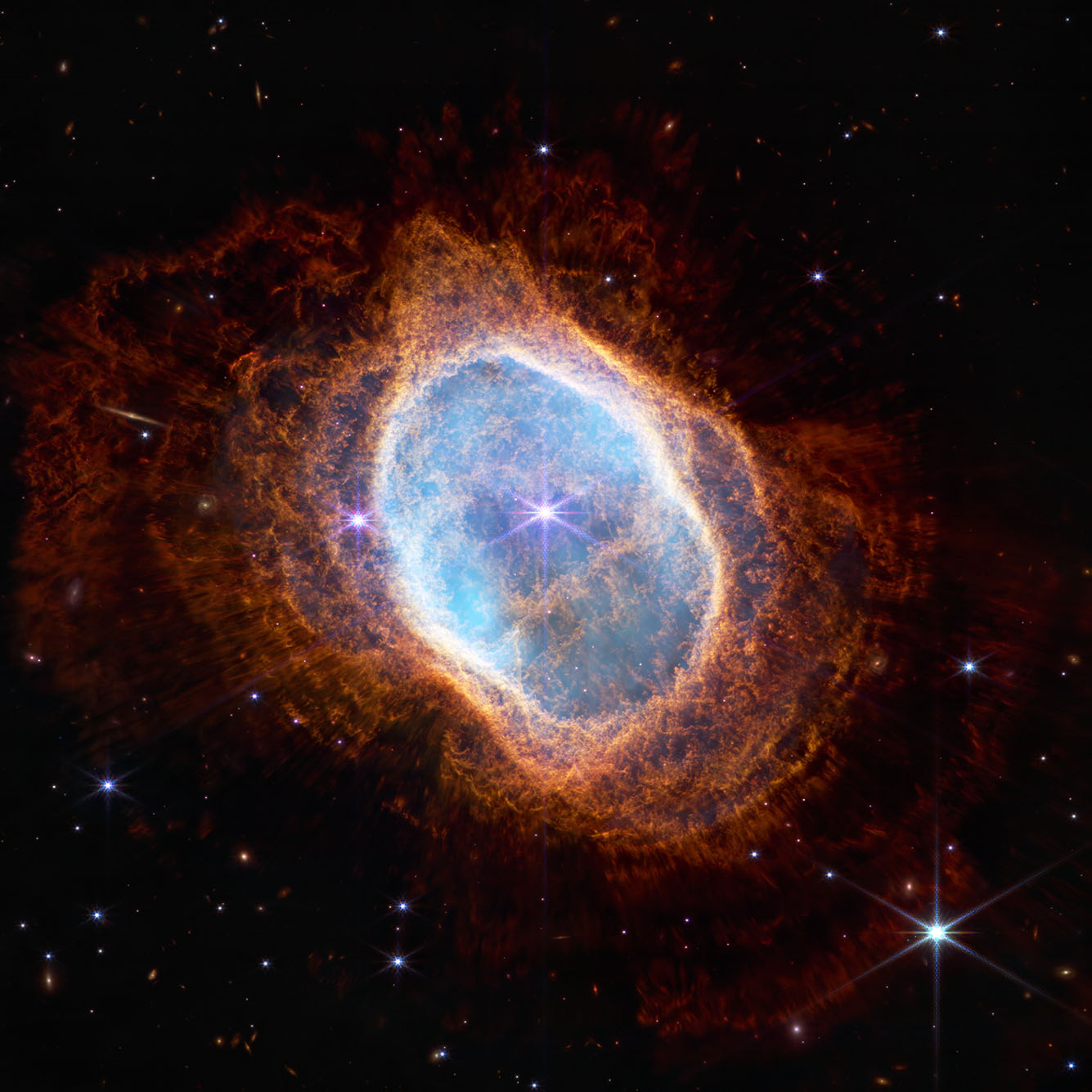
The launch of advanced space telescopes like the James Webb Space Telescope (JWST) is set to revolutionize our understanding of the universe. Scheduled to launch in 2021, JWST will provide unprecedented resolution and sensitivity, allowing astronomers to peer into the earliest epochs of the universe, study the formation of stars and galaxies, and analyze the atmospheres of exoplanets in greater detail than ever before.

Conclusion

The recent discoveries in astronomy have not only deepened our understanding of the cosmos but also posed new questions and challenges. As technology advances and our observational capabilities expand, humanity stands on the brink of further monumental discoveries. Each finding not only enriches our knowledge but also inspires us to continue exploring the vast, mysterious universe that surrounds us.