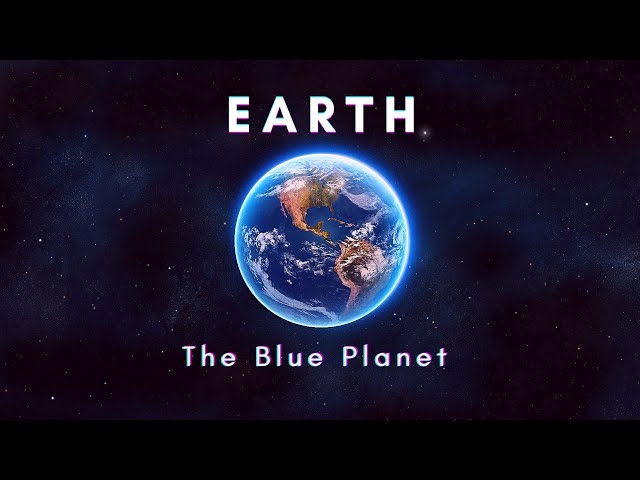
An Introduction to Earth: The Blue Planet

vcdiversity.org – Earth, often referred to as the Blue Planet, is a celestial body that holds a unique position in the vast expanse of the universe. It is the third planet from the Sun in our Solar System and the only known place to harbor life. This article aims to provide an introduction to Earth, exploring its physical characteristics, its place in the cosmos, and the life it supports.

The Cosmic Context

Earth orbits the Sun at an average distance of about 93 million miles (150 million kilometers). It takes approximately 365.25 days to complete one orbit, which is the basis for our calendar year. The planet’s axis of rotation is tilted about 23.5 degrees, which results in the seasons as Earth travels around the Sun.

Our planet is part of the Milky Way galaxy, a barred spiral galaxy that contains hundreds of billions of stars. The Solar System, including Earth, is located in one of the spiral arms, known as the Orion Arm.

Physical Characteristics

Earth is a dynamic planet with a diverse range of environments. Its surface is composed of 71% water and 29% land. The water is distributed in oceans, rivers, lakes, and ice caps, while the land is divided into seven continents: Asia, Africa, North America, South America, Antarctica, Europe, and Australia.

The atmosphere of Earth is a key factor in supporting life. It is composed primarily of nitrogen (78%) and oxygen (21%), with trace amounts of other gases. The atmosphere protects the planet from harmful solar radiation and helps regulate temperature through the greenhouse effect.

Life on Earth

One of the most remarkable aspects of Earth is its biodiversity. The planet is home to millions of species of plants, animals, fungi, and microorganisms. Life on Earth has adapted to a wide range of environments, from the deepest oceans to the highest mountains.

The biosphere, the global sum of all ecosystems, is the result of millions of years of evolution. It is a complex web of interactions between living organisms and their environment. Human beings are part of this web, and our actions have a significant impact on the health of the planet.

Environmental Challenges

Despite its beauty and resilience, Earth faces numerous environmental challenges. Climate change, caused by the burning of fossil fuels and deforestation, is leading to rising temperatures and sea levels, more extreme weather events, and the loss of biodiversity.

Pollution, habitat destruction, and overconsumption of resources are also threatening the delicate balance of Earth’s ecosystems. Addressing these challenges requires global cooperation and a commitment to sustainable practices.

Conclusion

Earth is a remarkable planet, a vibrant oasis in the vast, mostly lifeless cosmos. Its complex systems and diverse life forms make it a unique place in the universe. As stewards of this planet, it is our responsibility to understand and protect it for future generations. By learning about Earth and taking action to preserve its environment, we can ensure that the Blue Planet continues to thrive for eons to come.
NASA’s Quest for Interplanetary Exploration: The Journey to Mars

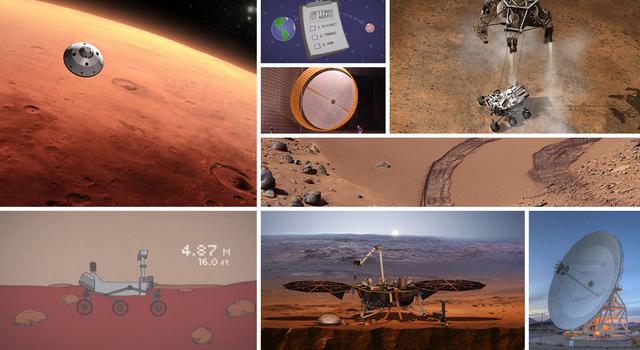
vcdiversity.org – The allure of Mars has captivated the human imagination for centuries, inspiring countless stories, theories, and dreams of interplanetary travel. In the realm of science and technology, NASA has taken the lead in turning this dream into a reality. The Journey to Mars is not just a mission; it’s a quest that represents the pinnacle of human curiosity, innovation, and the relentless pursuit of knowledge. This article delves into the intricate details of NASA’s ambitious plan to explore the Red Planet, highlighting the challenges, milestones, and the ultimate goal of establishing a human presence on Mars.

The Vision and Strategy:
NASA’s journey to Mars is a multifaceted endeavor that encompasses robotic exploration, scientific research, and the eventual goal of sending humans to the Red Planet. The agency’s strategy is built on a step-by-step approach, with each mission laying the groundwork for the next. The vision includes sending humans to Mars in the 2030s, with the ultimate aim of sustaining life there.

Robotic Precursors:
Before humans set foot on Mars, NASA has deployed a series of robotic missions to scout the terrain, study the climate, and search for signs of past life. Missions like the Mars Reconnaissance Orbiter, Mars Science Laboratory (Curiosity rover), and the Perseverance rover have provided invaluable data about the Martian environment. These robotic explorers have also been tasked with identifying potential landing sites and collecting samples that could be returned to Earth for further analysis.

Technological Innovations:
The journey to Mars requires groundbreaking technology to ensure the safety and success of the mission. NASA is developing the Space Launch System (SLS), the most powerful rocket in the world, to carry the Orion spacecraft, which will transport astronauts to deep space. The agency is also working on the Mars 2020 rover, which will demonstrate technologies for producing oxygen from the Martian atmosphere, a critical step for future human exploration.

Human Habitation and Sustainability:
For long-term exploration and habitation, NASA is researching ways to sustain life on Mars. This includes developing habitats that can withstand the harsh Martian environment, creating systems for growing food, recycling water, and generating power. The agency is also exploring in-situ resource utilization (ISRU), which involves using materials found on Mars to support the mission, reducing the need for supplies from Earth.

International and Commercial Partnerships:
NASA recognizes that the journey to Mars is a global challenge that requires international collaboration. The agency is working with space agencies from Europe, Russia, Canada, Japan, and other countries to share expertise and resources. Additionally, NASA is fostering partnerships with commercial space companies to develop new technologies and spacecraft that can support the mission.

The Journey Ahead:
The journey to Mars is fraught with challenges, including the health risks posed by long-duration spaceflight and exposure to cosmic radiation, the psychological effects of isolation, and the technical difficulties of landing large payloads on the Martian surface. Despite these obstacles, NASA’s commitment to overcoming these hurdles remains unwavering.

Conclusion:
NASA’s quest for interplanetary exploration and the journey to Mars represent a monumental leap for humanity. It is a testament to our species’ indomitable spirit of exploration and our desire to push the boundaries of what is possible. As NASA continues to forge ahead with its Mars program, the world watches with anticipation, knowing that each step taken is a step closer to realizing the dream of becoming a multiplanetary species. The journey to Mars is not just about reaching another world; it’s about expanding the horizons of human potential and ensuring the future of our civilization among the stars.

The Latest Discoveries in Astronomy: Exploring the Universe

The field of astronomy continues to captivate humanity with its profound insights into the cosmos. Over the past few years, a series of groundbreaking discoveries have expanded our understanding of the universe, from the detection of gravitational waves to the identification of potentially habitable exoplanets. This article delves into some of the most significant recent discoveries in astronomy, highlighting their implications for science and our place in the universe.

1. Gravitational Waves: A New Era of Astronomy

In 2015, the Laser Interferometer Gravitational-Wave Observatory (LIGO) made history by detecting gravitational waves for the first time. These ripples in spacetime, predicted by Albert Einstein a century ago, were generated by the collision of two black holes. Since then, multiple detections have been made, including waves from neutron star mergers. These observations have opened a new window for exploring the universe, allowing scientists to study cosmic events that were previously invisible.

2. The First Image of a Black Hole

In April 2019, the Event Horizon Telescope (EHT) collaboration released the first-ever image of a black hole, located in the galaxy M87. This groundbreaking achievement confirmed the existence of black holes and provided direct visual evidence of their event horizons. The image has been pivotal in validating Einstein’s theory of general relativity under extreme conditions and has spurred further research into the nature of black holes.

3. Exoplanet Discoveries: Searching for Habitable Worlds

The search for exoplanets—planets orbiting stars outside our solar system—has accelerated with advancements in telescopes and observational techniques. NASA’s Kepler and TESS missions have identified thousands of exoplanets, some of which reside in the habitable zones of their parent stars, where conditions might support liquid water and life. Notable discoveries include Proxima Centauri b, an Earth-sized planet in the habitable zone of the closest star to the Sun, and LHS 1140 b, a super-Earth with the potential to have a stable atmosphere.

4. Interstellar Visitors: Oumuamua and Borisov

In 2017, astronomers detected ‘Oumuamua, the first known interstellar object to pass through our solar system. Its unusual shape and trajectory sparked debates about its origin and nature, with some speculating it might be an artificial object. In 2019, another interstellar visitor, comet 2I/Borisov, was discovered, providing valuable data about the composition of objects from other star systems and offering a glimpse into the diversity of materials that exist in the galaxy.

5. The Expanding Universe: Refining the Hubble Constant

The rate at which the universe is expanding, known as the Hubble constant, has been a topic of intense study and debate. Recent measurements using different methods—such as observing the cosmic microwave background and supernovae—have yielded slightly different values, leading to what is known as the “Hubble tension.” Understanding this discrepancy is crucial for refining our models of the universe’s evolution and could point to new physics beyond the current cosmological theories.

6. Dark Matter and Dark Energy: Unraveling Cosmic Mysteries

Dark matter and dark energy remain two of the biggest enigmas in modern astronomy. Though invisible, dark matter’s presence is inferred from its gravitational effects on visible matter, while dark energy is hypothesized to drive the accelerated expansion of the universe. Ongoing experiments and observations, such as those conducted by the Large Hadron Collider and space telescopes, aim to uncover the nature of these mysterious components, which together constitute about 95% of the universe’s total mass-energy content.

7. Advances in Space Telescopes and Technology

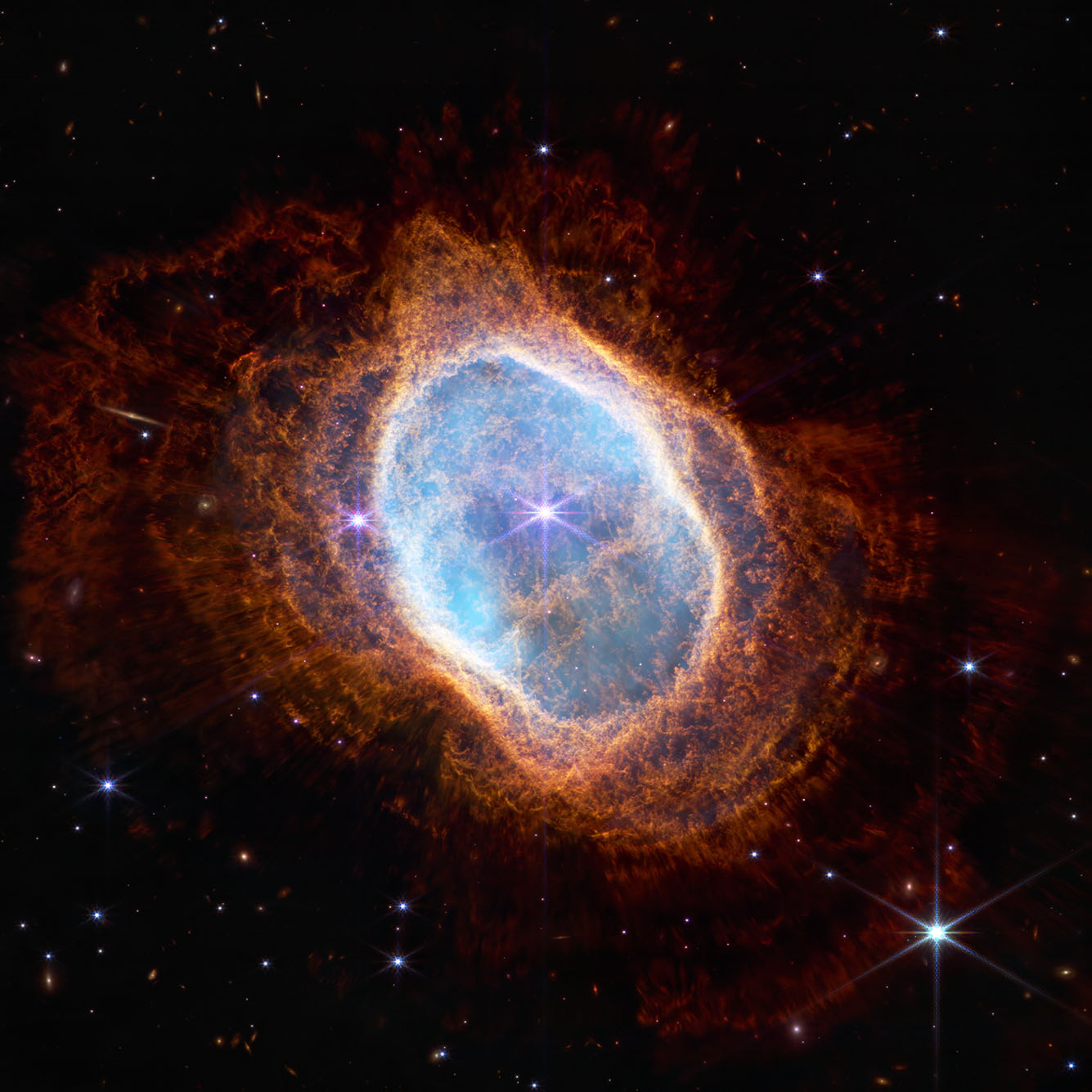
The launch of advanced space telescopes like the James Webb Space Telescope (JWST) is set to revolutionize our understanding of the universe. Scheduled to launch in 2021, JWST will provide unprecedented resolution and sensitivity, allowing astronomers to peer into the earliest epochs of the universe, study the formation of stars and galaxies, and analyze the atmospheres of exoplanets in greater detail than ever before.

Conclusion

The recent discoveries in astronomy have not only deepened our understanding of the cosmos but also posed new questions and challenges. As technology advances and our observational capabilities expand, humanity stands on the brink of further monumental discoveries. Each finding not only enriches our knowledge but also inspires us to continue exploring the vast, mysterious universe that surrounds us.